
Infrastructure Momentum Builds as Market Faces Emerging Supply-Side Pressures
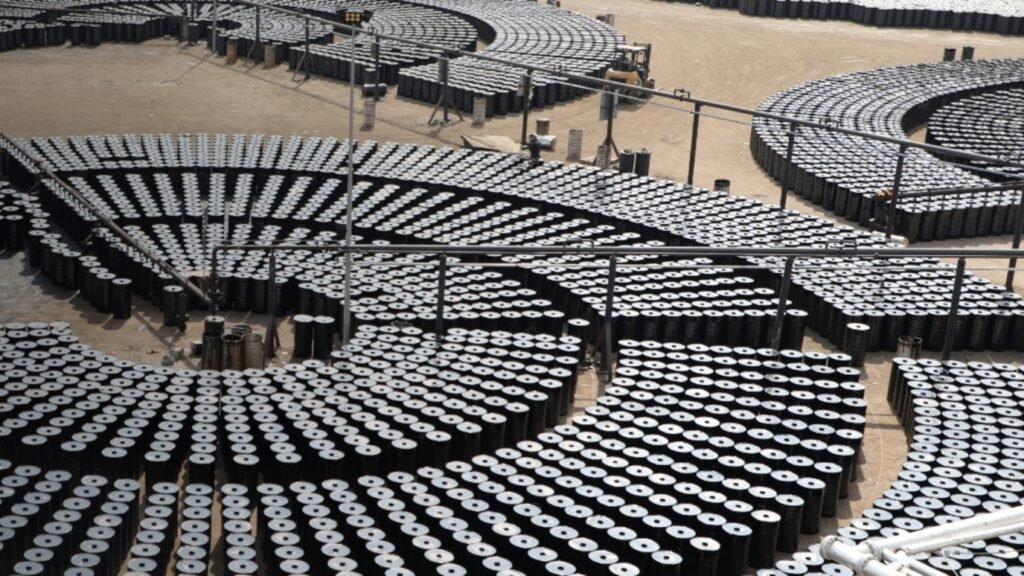
India is building at a scale and speed that is redefining its economic landscape. Highways stretch further, logistics corridors expand, and urban and rural connectivity continues to deepen. At the centre of this transformation lies a material often overlooked but absolutely essential: bitumen.
Today, India’s bitumen market stands at a decisive moment where demand is rising with certainty, but supply may face increasing disruption in the near future.
The market is working, but pressure is rising.
India’s infrastructure growth keeps demand high. Supply chains work, but now react quickly to global events. Geopolitical tensions, trade shifts, and shipping disruptions add uncertainty.
Cargo movements are becoming less predictable. Freight rates remain volatile. Procurement cycles are beginning to stretch.
There is no immediate breakdown but the system is no longer as fluid as it once was.
What appears stable today is increasingly dependent on variables that are outside domestic control.
India’s bitumen demand continues to grow on a strong and measurable foundation:
This growth is not incidental it is deeply tied to:
With nearly 90% of consumption linked to road infrastructure, demand is directly aligned with India’s long-term economic agenda.
Every kilometre built today creates demand for tomorrow.
The most critical aspect of India’s bitumen market is this:
Demand is not cyclical it is structural.
The scale of infrastructure investments ensures that consumption will continue to rise in the coming years. Large-scale national programs, combined with state-level expansion and urbanisation, are creating a continuous and compounding demand cycle.
Projections indicating a market size of $6.6 billion by 2033 further reinforce that:
India’s bitumen demand is still in its growth phase, not nearing maturity.
In contrast to demand, supply is governed by external and global factors.
Historically, supply stability was supported by domestic production supplemented by imports. Today, however, this balance is becoming more fragile due to:
This makes supply less predictable and more reactive.

Bitumen is a by-product of crude refining. As refineries globally prioritise higher-margin fuels:
This creates a structural mismatch.
Recent tensions in key energy corridors particularly in the Middle East have:
These developments directly affect countries like India that depend partly on imports.
India’s reliance on imports exposes it to:
Alternative sourcing options often come with higher costs and longer lead times, making them less efficient.
The movement of bitumen is becoming as important as its production.
In practical terms:
Supply exists but accessing it on time is becoming more difficult.
As this imbalance evolves, bitumen is undergoing a transformation.
It is no longer just a commodity that can be easily sourced. It is becoming a strategic resource, where:
This marks a shift in how the industry must operate.
India’s infrastructure momentum remains strong and with it, the demand for bitumen will continue to rise.
But the environment in which this demand is met is changing.
Demand is certain.
Growth is inevitable.
But supply may not keep pace.
And that is the defining challenge ahead.
Because the future of India’s bitumen market will not be determined by how much is needed
However, it is by how effectively the industry can secure, manage, and sustain the supply required to support its growth.